Animal removal starts with a Level 1 or Level 2 inspection under Chimney Safety Institute of America (CSIA) guidance to confirm what is inside the flue before anything is disturbed. A drop camera shows whether it is a…
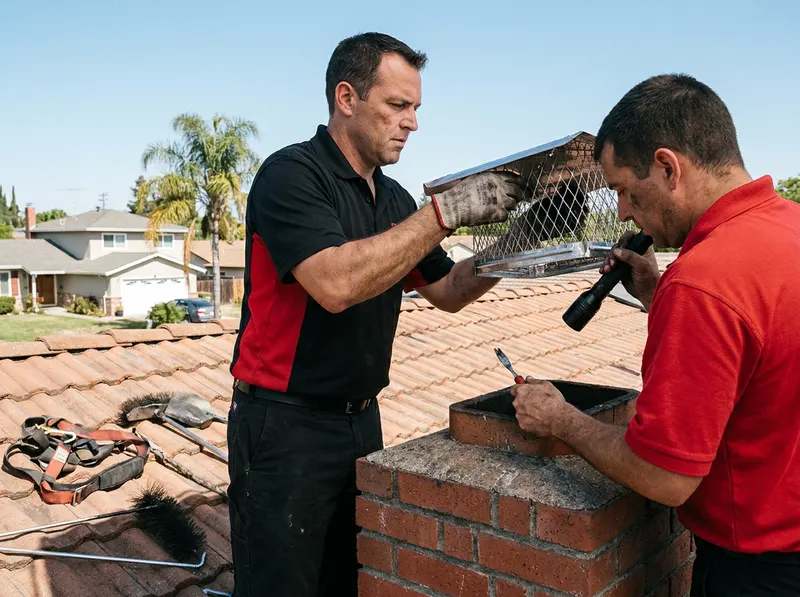
Animal removal starts with a Level 1 or Level 2 inspection under Chimney Safety Institute of America (CSIA) guidance to confirm what is inside the flue before anything is disturbed. A drop camera shows whether it is a live bird, an abandoned nest, or a raccoon that has denned on the smoke shelf. Chimney swifts are a common find in older Heritage District and Murphy Avenue-area homes; these are migratory birds protected under federal law, so active nests with eggs or chicks cannot be removed until the young fledge, and the honest answer at that point is to schedule removal and capping for after the season rather than force the issue.
Once the flue is confirmed clear or the animal is legally removable, the crew removes the nest, cleans out the chimney of droppings and twigs, and vacuums the smoke shelf so nothing is left to smolder or smell. Raccoons and squirrels are common in the tree-heavy blocks around Ortega Park, Cherry Chase, and Lakewood Village, and they return to the same open flue year after year until it is capped. A 316 stainless mesh cap is the fix that keeps the raccoons out; 316 stainless resists the coastal salt air that drifts inland toward the Sunnyvale Baylands, which is why it outlasts galvanized or aluminum caps on Birdland and Raynor rooftops.
The choice comes down to flue shape. A standard clay-tile flue takes a stock single-flue cap sized to the tile, installed the same visit. A large masonry crown with two or three flues, common on older Ponderosa and Serra chimneys, needs a custom chimney animal guard fabricated to cover the whole crown; that is the custom, ideally 316 stainless mesh animal spark arrestor built to the exact crown measurement, which runs higher and may take a return visit to fit. If the flue is only being cleared of a one-time bird, a stock cap is enough; if raccoons keep denning, the full crown-covering guard is the option that stops repeat entry.
Removal without capping solves today's problem but not next season's, since an uncapped flue reads as a hollow tree to nesting animals. Pairing the cleanout with a spark arrestor in one visit is the common path, and a free on-site estimate confirms flue count, crown size, and roof access before any price is set. Homeowners in Washington Park and Cumberland who want to get some quotes can compare on the same measurements: flue opening in inches, mesh gauge, and stainless grade.
Every job gets a firm, written price after a free on-site visit.
Tell us about your animal removal & spark arrestor job in Sunnyvale and we'll send a clear, written quote, usually the same day.
 Fluecare Chimney Sweep