A chimney water leak in Sunnyvale usually starts at one of four points: the concrete crown at the top, the metal flashing where the chimney meets the roof, a missing or rusted rain cap, or porous brick and mortar that…
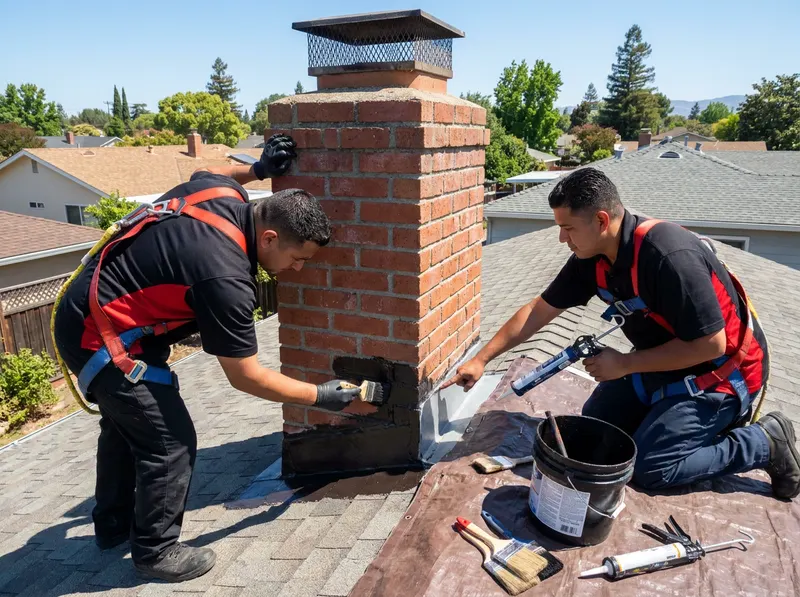
A chimney water leak in Sunnyvale usually starts at one of four points: the concrete crown at the top, the metal flashing where the chimney meets the roof, a missing or rusted rain cap, or porous brick and mortar that soaks up rain. The Chimney Safety Institute of America (CSIA) notes that water damage causes more chimney deterioration than fire, because freeze-thaw cycles and steady winter rain widen small cracks over time. Finding the true entry point matters, a stain on the living-room ceiling in a Cherry Chase or Ponderosa ranch home often traces to flashing two or three feet away, not the visible spot inside.
The inspection follows CSIA Level 1 and Level 2 standards described in NFPA 211. A Level 1 exam covers the readily accessible exterior and firebox and fits a straightforward leaking-chimney check on a one-story Birdland or Lakewood Village home. A Level 2 inspection adds the attic, roofline, and a camera scan of the flue interior, and fits cases where water has already reached drywall or where the chimney is being sold or was recently damaged. The written report names the exact leak source so a homeowner in Raynor or Washington Park is not paying for guesswork.
Repair options depend on the source. If the crown is cracked, a crown coat or full rebuild seals the top surface, a rebuild fits a crown with cracks wider than about 1/8 inch. If the flashing has pulled loose, resealing or replacing the step flashing and applying fresh counter-flashing stops entry at the roofline; this is the most common fix on older Heritage District and Serra homes with original galvanized flashing. If the brick itself is drinking water, a breathable siloxane water repellent applied to sound masonry blocks liquid rain while letting trapped vapor escape. That vapor-permeable product matters: a non-breathable sealant traps moisture inside the brick and accelerates spalling during Cumberland-area freeze mornings.
Waterproofing is preventive and works only on masonry that is already dry and structurally sound. A chimney with active mortar failure needs repointing first, then waterproofing, sealing over crumbling joints locks in the problem. Coverage on a standard Sunnyvale single-family chimney typically requires one to two gallons of repellent and lasts several years before reapplication. A free on-site estimate confirms which of these repairs the chimney needs and the exact price before any work is scheduled. Call (408) 550-9907 to look at the leak.
Every job gets a firm, written price after a free on-site visit.
Tell us about your chimney leak repair & waterproofing job in Sunnyvale and we'll send a clear, written quote, usually the same day.
 Fluecare Chimney Sweep