A flue is the vertical channel inside the chimney that carries smoke and combustion gases out above the roof. When a homeowner says "i got my flue clogged," the cause is usually one of three things: a creosote and soot…
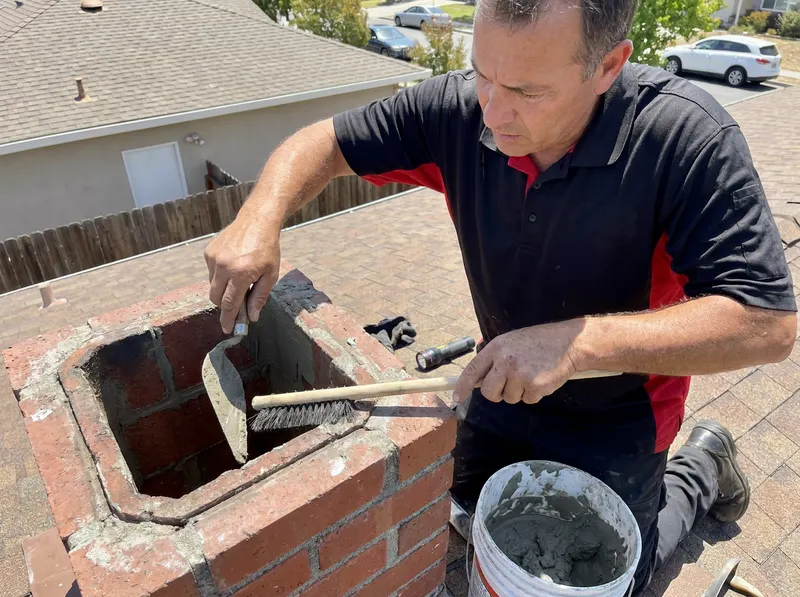
A flue is the vertical channel inside the chimney that carries smoke and combustion gases out above the roof. When a homeowner says "i got my flue clogged," the cause is usually one of three things: a creosote and soot blockage from years of use, a collapsed or cracked clay tile liner, or a nest or debris fall in flues left open on older Heritage District and Cherry Chase homes. The Chimney Safety Institute of America (CSIA) treats a blocked or damaged flue as a fire and carbon-monoxide hazard, which is why every flue repair here starts with an inspection before any quote is given.
The repair path depends on what the camera shows. A clogged flue with an intact liner is cleared by flue cleaning, mechanical brushing plus vacuum containment, and that alone restores draft on most jobs. A flue with cracked or spalled clay tiles needs chimney relining: a stainless steel liner sized to the appliance is dropped down the flue and sealed top and bottom, which also corrects draft problems that cause smoke to back into the living room. A flue that is permanently out of use, common when a Birdland or Ponderosa homeowner switches to a sealed gas insert, is closed with a flue sealing plate or a top-sealing damper so heated air stops escaping up the chimney. If a Sunnyvale homeowner says "i want to seal it off," that is the correct choice only for a flue that will not be used again; a fireplace still in service should be relined or cleared instead.
Decision guidance in plain terms: if the flue is clogged but the liner is sound, choose clearing; if the clay liner is cracked or the chimney has no liner, choose relining; if the fireplace is retired for good, choose a permanent seal-off. The trade-off with relining is cost against safety, a stainless liner is the most expensive option but meets NFPA 211 clearance requirements and carries a longer service life than patched clay tile. An edge case worth naming: pre-1960 masonry chimneys near the Murphy Avenue Historic District sometimes have offset flues that a standard liner cannot pass straight through, which requires a flexible liner and adds to the labor.
Inspection level matters for what gets found. A CSIA Level 1 inspection covers readily accessible parts of a flue in regular use with no changes to the system. A Level 2 inspection, required by NFPA 211 after a liner change, a flue fire, or a property sale, uses a video scan of the full flue interior and is the standard used before quoting a relining job in Lakewood Village, Raynor, Serra, Cumberland, Washington Park, and Ortega Park homes. Homeowners asking "is this a chimney company" that only sells flue work get a written inspection finding either way, so the repair is documented, not verbal.
Every job gets a firm, written price after a free on-site visit.
Tell us about your flue repair & sealing job in Sunnyvale and we'll send a clear, written quote, usually the same day.
 Fluecare Chimney Sweep